
Unscripted Street Drama: A Viewer's Guide to Real Footage

Updated: 5 days ago
Ask ten people what unscripted street drama means and you will get ten answers, most of them wrong. Some assume every clip is raw and unedited. Others assume the whole thing is staged with paid actors. Both assumptions cost viewers time and money, especially when a subscription runs $29.99 a month and the first episode tells you very little. This field guide breaks down what unscripted street content actually looks like on screen, how the format is built, and the specific signals that separate authentic urban drama from manufactured conflict.
Table of Contents
Quick Takeaways
Key Insight | Explanation |
|---|---|
Unscripted does not mean unedited | No fixed script is used, but every episode is still cut, sequenced, and often captioned or scored before you see it. |
Follow the camera operator | Footage that tracks one person from close range, moving when the situation moves, usually signals observation rather than setup. |
Repeated phrasing is a red flag | If two people from different blocks use the same phrase or joke structure, expect heavy prompting behind the scenes. |
Look for consequences that arrive late | Real disputes are messy and delayed. Conflicts that resolve neatly inside one episode are often built around the conflict. |
Judge a series by episode two | Pilots are the most polished episode. The second one shows whether the format can sustain real stories with new people. |
Match your expectations to the format | Street interviews, reality series, and documentaries promise different things, so judge each by the standard it actually sets. |
What Unscripted Actually Means on Screen
In the plainest sense, unscripted television is content produced without a script. Industry explainers describe it as all content made that way, with examples ranging from talk shows to documentary series and game shows. That definition is a starting point, not a verdict on authenticity.

In practice, the absence of a script changes what producers can control, not whether they control anything. A crew can pick the block, choose the time of day, decide which people get introduced, and decide where the story starts. Nobody hands participants lines, but the environment is still engineered around them.
Unscripted does not mean unedited
Every episode you watch has been through an edit suite. Editors choose which thirty seconds of an argument survive, which reaction shot follows a threat, and which background sound gets pushed under the dialogue. A corner conversation might run forty minutes on the hard drive and six minutes on your screen. Both versions can be real, but only one is the story you are watching.
Why the definition matters for your money
If you think unscripted means unedited, you will judge every series by the wrong standard and feel cheated when a dramatic moment looks cut. The better question is whether the people on screen were reacting to real circumstances, and whether the edit kept enough context to make those reactions understandable. That is the standard a serious viewer should apply to street content.
Pro tip: Before starting any series, read the episode descriptions and check whether the producers name a shoot location or a community contributor. Specific credits usually point to a documentary approach, while vague blurbs often mean the story was built around a premise first.
Reading the Camera: Who Is Filming and Why It Matters
The camera is the fastest clue to how a scene was made. Strong street footage often comes from someone standing close to the action, holding the camera at chest height, and moving when the situation moves. That kind of framing is hard to fake convincingly over an hour, which is why experienced viewers spot staged content faster.
Handheld with a reason
Shaky handheld alone proves nothing, since some productions add shake in post to look raw. What matters is whether the operator's movement follows the people or follows a plan. When the frame swings to catch a sideways glance or a phone being pulled out, you are watching someone react in real time.
Multiple angles on the same moment
Real events rarely arrive with tidy coverage. If a confrontation appears from a wide shot, a close-up, and a view from behind a parked car, ask how many people were filming and whether the editor had to stitch their footage together. Clean coverage of a sudden argument from perfect positions is a sign of setup.
In practice, a crew that spent weeks on one corner will have different angles than a crew that rushed a block for twenty minutes. Learning to recognize that difference is the first skill of a field viewer. The footage itself usually tells you how much time the filmmakers had.
Audio that does not match the frame
Listen for background noise that stays consistent when the picture cuts. A siren that stops mid-scene, or a crowd that goes silent between two shots, usually means the audio was rebuilt. Good street footage keeps its ambient sound because the ambient sound is part of what happened.
Spotting Staged Moments in Street Footage
Staging in this genre rarely looks like a fake fight. More often it looks like a setup that makes the next reaction predictable. Once you know what to listen for, you can separate a conversation that drifted into conflict from one that was steered toward it.
Lines that repeat across people
If two people from different blocks use the same phrase, the same tone, or the same punchline structure in separate scenes, expect heavy prompting. Real speech varies from person to person. Prompted speech tends to converge on the story a producer needs told.
The too-perfect entrance
Watch how people enter scenes. Real street life is full of people walking into frame late, leaving early, or talking over each other without a clear endpoint. Staged entrances are clean. The character arrives at the exact moment tension peaks, and the camera is already positioned to catch their face.
Consequences that never arrive
A common mistake is to assume that a dramatic threat means something actually happened. Watch what follows. In real disputes, consequences are messy, delayed, or absorbed back into ordinary life. When every confrontation resolves neatly within the episode, the story is being built around the conflict rather than documenting it.
Pro tip: Keep a short note on any moment that feels too convenient. If the same character produces a convenient moment in three different episodes, that pattern is stronger evidence than any single scene.
The Main Formats: Interviews, Reality Series, and Documentaries
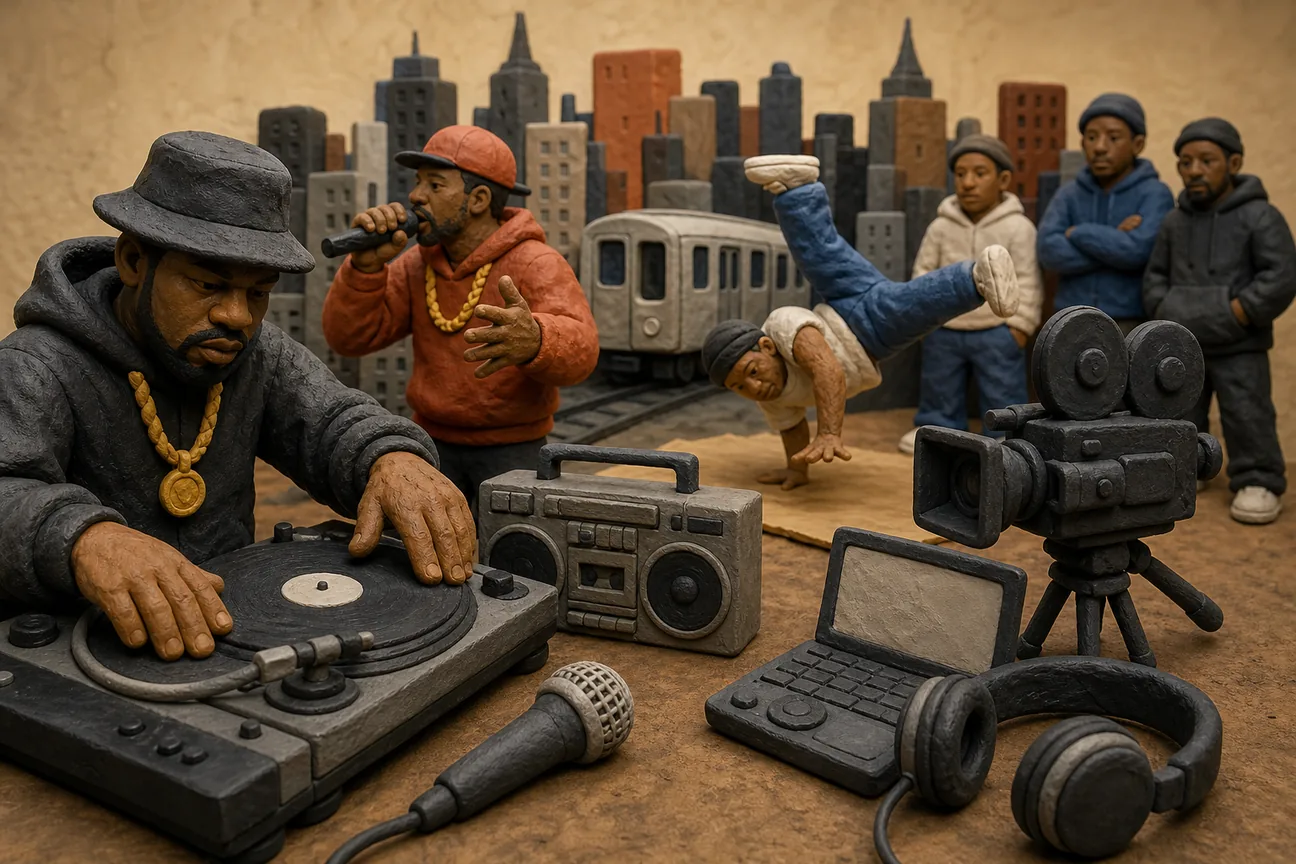
Hood entertainment is not one format. Street interviews, urban reality shows, and hip-hop documentaries each promise something different, and each earns trust in its own way. Matching your expectations to the format keeps you from judging a documentary by reality-show standards, or the reverse.
Reality versions of scripted shows are a useful lens here. Writers Digest notes that docu-dramas, docu-soaps, and docu-comedies are reality versions of scripted shows, and that MTV's The Osbournes was an unscripted sitcom. A format can borrow comedic or dramatic structure while still filming real people, which is why a series can feel rehearsed even when nobody is reading lines.

Street interviews
Street interviews are the most direct form. A host asks questions on a corner, and the answers become the content. Their authenticity depends on who is asking and whether speakers are given space to finish a thought. Short, clipped answers cut into punchlines usually mean the interviewer was shaping the frame.
Urban reality series
Reality series follow participants across weeks or seasons, so the real test is persistence. A genuine participant has a life outside the camera, and that life shows up in missed calls, conflicting schedules, and family pressure. When every conflict arrives in an episode-sized package, the format is doing more of the work than the people.
Hip-hop and street documentaries
Documentaries usually carry the strongest context, because the filmmaker is trying to explain a place, a scene, or a career. The risk is over-narration. A documentary that tells you what to feel every ten seconds treats its audience as if it cannot read a street for itself.
Editing Is Where Authorship Lives
Most of the authorship in street content lives in the edit. The camera records, but the editor decides what the viewer believes happened. Industry commentators have been tracking this blur for some time. Televisual has published a blog post on how unscripted television is becoming increasingly scripted, with commentary from Nicholas Sercombe, CEO of Harry King TV.
When the edit does the heavy lifting, the honest question is not whether a scene was real, but whether the context was left in.
Cuts that change the meaning
A reaction shot is the easiest way to change a story. Show a threat, cut to a face, and the audience decides who was wrong. Good editors use this technique in every genre, so the goal is not to hunt for cuts. The goal is to notice when a cut carries the verdict for you.
Music and captions as a second script
Score, sound effects, and on-screen captions tell viewers how to feel. A dramatic sting after an ordinary sentence is an editing choice. Captions that label someone as a threat before we learn what happened work as a second script, and they are easy to catch once you start listening for them.
What good editing looks like
Good street editing lets a scene breathe. The cut comes after a question is answered, the context appears before the consequence, and a reaction is not used as a cheap punchline. When you see those choices, you are watching an editor who respects the people on screen.
Pro tip: Pause on the first frame after a dramatic sting. If the picture shows a calm moment that does not match the music, you have found a shaped scene, and it should factor into how you judge the rest of the episode.
Comparing Three Common Formats Side by Side
The table below compares the three formats most viewers encounter. The goal is not to rank them, since each answers a different question. It shows what is usually real, where production has the most influence, and what to test first.
Format | What Is Usually Real | What to Watch For |
|---|---|---|
Street interviews | The speaker's own words and reactions to a question asked on the spot | Clipped answers that land as punchlines, and hosts who interrupt before a thought is finished |
Urban reality series | Personal conflict, family pressure, and the daily friction of a participant's life | Conflicts packaged to fit an episode, and cast members who seem to know exactly when the camera is rolling |
Hip-hop and street documentaries | Archival context, long-form interviews, and the filmmaker's on-the-ground access | Over-narration, selective sourcing, and music cues that tell you how to feel |
In practice, the most reliable format for raw street life is the interview, because it captures people speaking in their own language. The most reliable format for context is the documentary. Reality series deserve the most skepticism, because the format rewards conflict and rewards arcs that close inside a single episode.
A common mistake is to compare formats by production budget. A low-budget reality show can be shaped tightly, while a well-funded documentary can still respect its subjects. Compare formats by what each one is structurally built to do.
How to Test a Series Before You Subscribe
A subscription should be judged on evidence, not on trailers. Trailers are edited to sell the strongest moment, which is the same tool that makes raw content feel dramatic. Before you commit to any platform, run a small test across a few episodes and a few formats.

The trailer test
Compare the trailer with the first full episode. If the trailer's most intense moment is missing from the episode, or appears in a different context, you have learned how the marketing is built. Trailers for a genuine documentary tend to show process as much as payoff.
The episode two rule
Pilots are often the most produced episode in a series, because producers are selling the format to the viewer. Watch episode two. If it introduces new people without simply repeating the pilot's beats, the series is building a longer story. If it repeats the same confrontation with new faces, expect the format to run on repetition.
Checking the credits and crew
Credits matter. Look for named directors, producers, and editors, and check whether the series identifies its contributors and locations. Specific credits signal accountability. Anonymous credits are not proof of fakery, but they make it harder to know who shaped the story.
Pro tip: After each episode, answer three questions: who filmed this, what happened before the camera started, and what did the edit leave out. Writing the answers down makes it much easier to compare shows over a month.
Viewing Habits That Sharpen Your Read
Authenticity judgments improve with practice, and they improve faster with habits. The viewers who get the most from street content are not the ones who trust everything or distrust everything. They keep a consistent method and apply it across series.
Keep a running log
Write down the names, neighborhoods, and recurring conflicts you see across episodes. A log turns scattered impressions into patterns. After a few weeks, you will notice which productions rely on the same tricks and which ones are willing to let a scene end without a neat verdict.
Watch the people, not only the plot
Plot is what producers sell. People are what you should watch. Notice how participants talk about their community, how they handle disagreement, and whether they get space to correct the record. Respect for participants usually shows up in small moments, not in the big confrontation.
Compare claims against the wider record
When a series makes a claim about a neighborhood, a rivalry, or an event, check it against local reporting or the subjects' own public statements where possible. If you cannot verify anything, that is information too. Treat unverified drama as entertainment, not as evidence.
At Hood Box Office, which has been curating uncut, uncensored street content since 2003, we apply the same test to every title we add. Viewers who run it consistently tend to find the series that feel most honest to them, whatever format they prefer.
Pro tip: When you find a series you trust, note its camera work and editing style. Those markers are testable on the next title, so your standards carry across the whole catalog instead of resetting with every new show.
Frequently Asked Questions
What does unscripted street drama mean?
Unscripted street drama is content about street life produced without a fixed script. The people on screen mostly react to real circumstances, while producers shape the framing, sequencing, and edit. It is not the same as unedited footage.
How can I tell if a street series is staged?
Look for repeated phrasing across different people, entrances that land exactly on the peak of tension, consequences that never arrive, and audio that changes between shots. No single sign is conclusive, but several together are a strong signal.
Is hood reality drama the same as a documentary?
No. Reality series follow participants over time and build conflict into their structure, while documentaries usually explain a place, scene, or person. Both can be authentic, but they should be judged by different standards.
What is the best way to test a streaming service before paying?
Watch at least two episodes from different formats, compare the trailer against the full episode, and check whether the credits name the crew. A service that shows its process is easier to trust than one that only sells its strongest moments.
Why does editing matter so much in authentic urban content?
Editing decides which moments survive, what context the viewer sees, and how a scene is scored and captioned. Two viewers can watch the same raw footage and reach different conclusions depending on the cut.
Does an unscripted series have to be uncensored to be authentic?
No. Authenticity is about whether the people on screen were reacting to real circumstances and whether the edit kept enough context to understand them. Uncensored language helps the picture feel raw, but it does not prove the story is honest.
What signal do you trust most when you decide a street scene is real, and have you ever caught a series staging a moment you thought was authentic?


Comments