
Hood Box Office vs Netflix: Why Mainstream Can't Compete

Updated: 5 days ago
Every few months someone asks whether Netflix will simply absorb street culture content and make Hood Box Office unnecessary. It is a fair question, since Netflix has the budget, the reach, and a catalog that spans nearly every genre. Hood Box Office vs Netflix is not a contest over who has more titles. It is a question of what a mass-market platform can afford to show, and what a network built around uncut, uncensored hood entertainment since 2003 can show that a general service never will. This article explains why the gap is structural, not temporary, and what that means for viewers deciding where their monthly budget goes.
Table of Contents
Quick Takeaways
Key Insight | Explanation |
|---|---|
Subscriber growth sets the rules | Netflix's revenue depends on adding subscribers, so its programming has to appeal to the broadest audience possible, not the most specific one. |
'Uncensored' is the product here | On a mass platform, edits for language, violence, and advertiser comfort are routine. On Hood Box Office, raw content is the reason to subscribe. |
Archive depth beats catalog size | A large general library rarely holds the interviews, neighborhood footage, and deep-cut hip-hop documentaries that define street culture. |
Compare cost per hour you actually watch | The headline monthly price tells you little. Divide the subscription cost by the hours you spend on titles that exist only on one service. |
Ask who made the content | Creators inside the culture frame stories differently than outside commissioners working from a brief written for a general audience. |
Audit your watchlist before renewing | List the last ten titles you finished and check how many of them exist on each service before you pay for another month. |
Why Netflix Cannot Afford Hood Box Office Content
A World Finance special report on the industry puts the core issue plainly: Netflix is dependent on subscriber growth for revenue, and it already counts 222 million people among its subscribers. That dependency shapes every greenlight decision. It is the reason a catalog built for a global audience will always lean toward titles that travel easily across borders.

A show about one neighborhood, with a loyal and deeply engaged audience, may be excellent business for a dedicated network. On a spreadsheet built for hundreds of millions of households, that same show looks small, and small shows get cut first.
Why niche depth looks like a risk
A mass platform needs content that can be explained in one line to a stranger in another country. Raw street interviews, regional slang, and documentaries that assume you already know the history of a block are hard to pitch that way. The usual result is a sanitized version or no version at all.
An analysis published by Entertainment Strategy Guy in 2023 reported that theatrical films tend to draw higher viewership in their streaming window than films that go straight to streaming. Audiences respond to work that arrives with context and promotion, and a catalog that treats every title as interchangeable loses that signal.
Pro tip: When a service advertises 'urban' or 'street' content, check whether the titles are original works from people inside the culture or licensed material repackaged for a general audience. The difference usually shows up in the first five minutes.
Consolidation makes the squeeze tighter
Fox Baltimore reported that Netflix announced plans to acquire the streaming and studios side of Warner Bros. Discovery, including HBO, HBO Max and DC Studios. Bigger catalogs under one owner usually mean more pressure to standardize, not more room for narrow voices. That is the direction the industry is moving, and it works against dedicated networks.
Uncensored Means Something Different on a Mass Platform
Where edits happen and why
Large platforms run content through legal, brand, and advertiser review, and that process is rarely visible to viewers. A word gets bleeped, a scene gets trimmed, a caption gets softened. Each change looks small, but together they change the story being told.
Hood Box Office does not work from that editing layer. When a subject speaks plainly about the street, the swearing, the hustle, and the conflict stay in, because the point of the film is what people actually said and did.
The difference between edgy and authentic
Mainstream platforms produce plenty of edgy content, but edgy is usually packaged. It is a costume worn for a season and then retired. Authentic is a relationship with the people on screen, and that takes years to build. A platform tuned for thumbnails and autoplay rarely has the patience for it.
Mass-market platforms do not fail niche audiences by accident. They fail them because the business model rewards the largest possible audience, and every edit is a small step toward that audience.
Viewers who want the unedited version should expect to pay for it directly. That trade is the point of a subscription built around the content itself. You are paying for the material as it was made, not for a version adjusted for everyone.
Authentic Street Culture Is Not a Genre Tag
Who holds the camera
Search for 'street culture' on most large services and you will find a category label. Labels are cheap. What matters is who decided what the story was. A documentary produced by someone who grew up in the neighborhood asks different questions than one commissioned from a brief written in a conference room.
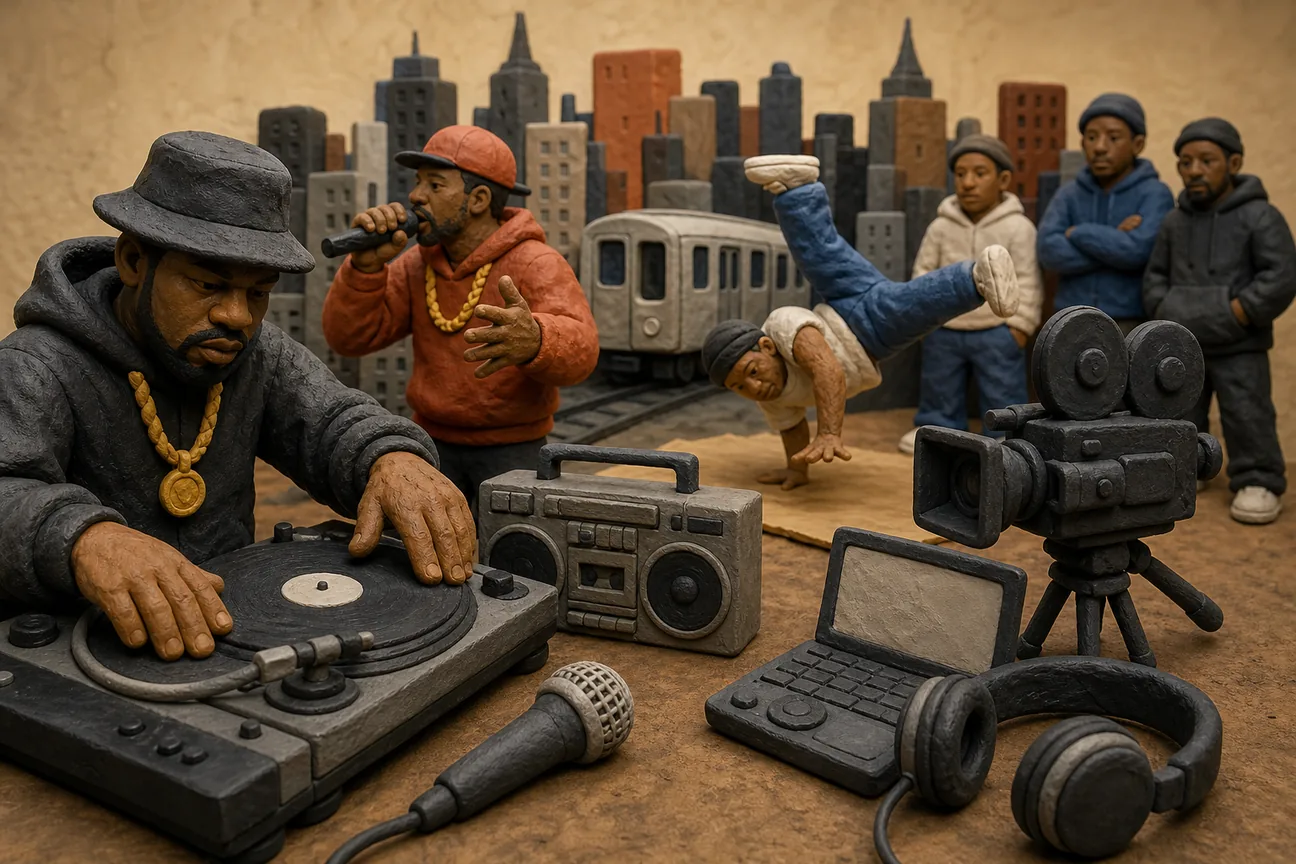
Hood Box Office has been built by people working inside street culture since 2003. That history shows up in which subjects get time on camera and which ones get cut for pace.
Hip-hop documentaries need context, not highlights
A hip-hop documentary that works for fans usually runs long, because the story depends on the sequence of records, feuds, label deals, and neighborhoods that shaped an artist. Mainstream platforms tend to favor the highlight reel, a short recap designed for a casual viewer who might drop off at any moment.
The result is that fans keep seeing the same three stories retold. Deep archive work, where one artist's career is traced through interviews and footage, is slow and expensive, and it rarely fits a model that needs new releases every week.
Pro tip: Before committing to a documentary, look at the credits. If people who appear in the film also worked on it, you are more likely to get first-hand context than a secondhand summary.
Pimp Culture Documentaries and the Archive Problem
Why archival depth matters
Pimp culture documentaries are one of the clearest examples of content a general platform struggles to carry at full depth. The subject is historically specific, regionally uneven, and often misunderstood by outside audiences. A serious film has to explain its own vocabulary, its own economy, and its own history without flattening any of it.
That kind of work requires patient editing and a viewer who wants the full context. It does not fit neatly into a feed built around short attention spans, and a mass catalog has little incentive to build out an archive when a licensed title can fill the same slot.
Context is the product
On a dedicated network, context is part of the product itself. Viewers come back because the programming assumes they care about the subject. That expectation lets creators go deeper, skip the basic explainers aimed at people who will never subscribe anyway, and treat the audience as insiders.
Compare that with a catalog where a documentary sits between a cooking show and a reality competition. The film may run the same length, but the surrounding signals tell you it is one more item to scroll past.
We are not claiming mainstream services never run this material. Some do, occasionally, and some of it is good. The point is that it becomes a line item in a broad library rather than the reason the library exists.
What Subscriber Economics Mean for Your Watchlist
Reading the price fairly
Netflix's help center page on plans and pricing has listed a Standard plan at $19.99 per month and a Standard plan with ads at $8.99 per month. Those figures change, so confirm them on the page before you decide. Hood Box Office's Boss Plan is $29.99 per month, which is $10 more than that Netflix figure.
Because the sticker prices match, the real decision comes down to what you watch. A price comparison alone will not tell you which service earns its place on your bill.
Cost per hour you actually watch
A simple test works better than a feature comparison. Take the last month of viewing, count the hours you spent on titles that exist only on one service, and divide the subscription price by those hours. For a dedicated street culture viewer, that number is often lower than the cost of a general service where most of your hours go to shows you could find anywhere.
In practice, most people are surprised by the result. They assume a large library means more value, then discover that most of their time goes to a small set of familiar titles.
Pro tip: Track your viewing for two weeks before renewing anything. Count the titles you finished, not the ones you started, and you will see quickly which service earns its monthly fee.
How the Main Options Compare
The honest comparison has three rows: a mass-market subscription platform, free video sharing sites, and a dedicated network. Each does something well, and each falls short in a specific way.
Approach | Where It Works | Where It Falls Short |
|---|---|---|
Mass-market subscription (for example, Netflix) | Broad catalog, large production budgets, and easy access across many devices | Content is shaped for global, advertiser-friendly appeal, and deep street culture archives make up a small share of the library |
Free social and video sharing sites | Instant access to clips, interviews, and trending moments | Quality, context, and rights are inconsistent, and nothing is curated for a viewer who wants long-form work |
Dedicated subscription network (Hood Box Office) | Uncut, uncensored programming, original series, and documentaries made by and for street culture enthusiasts | Smaller total catalog, and it does not cover genres outside urban and street culture |
If you want the widest possible library, a mass platform wins on breadth. If you want the uncut version of the culture itself, only a dedicated network is built to deliver it as the default experience.
Deciding Where Your Viewing Money Goes
A practical test before you renew
Start with a simple question: which titles would you miss if they disappeared tomorrow? For most people who follow street culture, the answer is a short list of documentaries, interviews, and series that no general service carries in full. That list tells you more than any feature checklist.
Next, check whether the content is available elsewhere in the same form. Edited, shortened, or dubbed versions do not count as the same title. An uncut version and a trimmed version can differ in exactly the moments that matter most.

Using a dedicated network alongside a general service
Many viewers keep a general platform for films and comedy and add a specialized network for the culture they care about. That is a reasonable split. The mistake is paying for two overlapping general services and calling it a specialized habit.
Keep one general subscription if you need it, then make the dedicated network your primary spend for street culture. That keeps your budget tied to the content you actually value.
Common Mistakes When Comparing Services
Counting titles instead of relevant titles
A catalog of thousands sounds impressive until you search for the specific documentary you want and find it missing. A large number of titles can hide the fact that very few match your interests. Count relevant titles, not total titles.
Assuming the most expensive plan is the best value
A higher tier only makes sense if you use the features it unlocks. Many viewers pay for premium plans out of habit. Look at what you actually watch, not what the marketing page highlights.
Treating raw content as something to find later
Some viewers subscribe to a mass platform planning to find the uncut street material later. They rarely do, because recommendation systems push what is popular, not what is raw. If you want that material, choose the service where it is the default, not the one where it might turn up.
Frequently Asked Questions
Can Netflix ever offer the same kind of content as Hood Box Office?
Netflix can offer individual titles that overlap with street culture themes, and some of them are good. A full-depth, uncensored street culture library is a different product, and its business model makes that unlikely. Its revenue depends on subscriber growth, so programming has to appeal broadly.
Is Hood Box Office worth $29.99 per month?
If you watch the content regularly, yes. Count the hours you spend on titles that exist only on the network. If that number is meaningful, the monthly price is easy to justify. If you rarely watch, skip it.
What does uncensored mean on a streaming platform?
Uncensored means the programming is presented without bleeped language, trimmed violence, or editing for advertiser comfort. It is the version the subject and filmmaker intended, not one adjusted for a general audience.
Do mainstream streaming services carry street culture content at all?
Yes, some do, occasionally. The issue is depth and consistency. A few titles inside a broad library rarely substitute for a dedicated archive that is built around the culture from the start.
Should I cancel my general streaming service if I subscribe to a street culture network?
Not necessarily. Keep the general service if you use it for films, comedy, or family viewing. Cancel it if most of your hours go to titles you could replace with the specialized network.
Tell us which services you keep, which ones you have dropped, and what made the difference for your viewing habits.


Comments