
The Killer Tapes: Hood Box Office's Rarest Street Archive

Before streaming algorithms decided what street culture looked like, someone had to point a camcorder at the real thing and press record. That someone was not a network executive or a studio producer. It was hustlers, block reporters, and scene insiders who understood that what was happening in their neighborhoods deserved documentation. The Killer Tapes represents Hood Box Office's deepest dive into that era, pulling from a camcorder street footage archive that most platforms do not know exists and would not know how to contextualize if they found it. This is not reconstructed history. It is the unfiltered original record, and it lives exclusively inside the Hood Box Office network.
Table of Contents
Quick Takeaways
Key Insight | Explanation |
|---|---|
The Killer Tapes draws from camcorder footage dating back to Hood Box Office's earliest archive work | This is not recreated content. The source material was shot on consumer-grade camcorders by street-level creators during an era when no mainstream platform would touch it. |
TrashMan is one of the most recognizable figures in the Hood Box Office vault | Content associated with the TrashMan persona captures the raw, unscripted nature of early street documentation that defined the pre-streaming underground scene. |
The street DVD era (roughly 2000 to 2010) produced content that is now culturally irreplaceable | Brands like Smack DVD, The Come Up, Cocaine City, and Hood Box Office's own catalog documented moments that no mainstream outlet covered at the time. |
Hood Box Office has been operating since 2003, making it one of the oldest continuous archives in urban entertainment | That longevity means the platform holds footage that predates social media, smartphones, and the mainstream crossover of street culture into the broader entertainment industry. |
The complete archive remains private and accessible only through the Hood Box Office subscription network | What is publicly available is a curated selection. The full depth of the camcorder-era collection is exclusive to paying subscribers. |
This content is uncut and uncensored by design | The editorial choice to leave footage intact is a preservation decision as much as an entertainment one. Editing out context erases history. |
Hood Box Office original series like The Killer Tapes exist because no other platform built the infrastructure to hold this content | The network created the category. Other platforms are now trying to enter a space that Hood Box Office has owned for over two decades. |
What The Killer Tapes Actually Are
The name tells you everything about the editorial instinct behind this series. A killer tape, in street DVD culture, was not a tape about violence. It was a tape so raw, so unguarded, and so far outside what mainstream media would broadcast that it moved through neighborhoods by hand. People dubbed copies. They traded them. They kept them.
The Killer Tapes as a Hood Box Office original series is built on that same principle: footage that is too authentic, too close, and too honest to exist anywhere else. The series pulls from the deep archive that Hood Box Office has been building since 2003, organizing camcorder-era street footage into a format that gives viewers not just the clips but the context around them.
What separates this from a simple clip compilation is curation with actual knowledge of the scene. Anyone can post old footage. Hood Box Office understands what they are looking at, who was involved, and why the moment mattered. That institutional knowledge, built over two decades, is what makes the series worth watching rather than just watching random archive clips.


The Camcorder Era: Why It Matters
From roughly 2000 to 2010, an underground network of street DVD producers documented urban America in a way that no mainstream outlet did. They did it with consumer-grade camcorders, limited budgets, and complete freedom from editorial interference. The footage that came out of that period is now a primary historical record of what those neighborhoods looked like, sounded like, and argued about during a specific window in time.
What camcorder footage captures that produced content cannot
A professional crew changes the room. Cameras with production lighting, sound engineers, and a director giving cues fundamentally alter how people behave. The camcorder era worked because the camera was small enough and familiar enough that people forgot it was there, or simply did not care. The result is documentation with the guards down.
That candor is not reproducible. You cannot go back and reshoot a 2004 street interview with the same energy it had when the subject had no idea the tape would still be circulating two decades later. Camcorder street footage from this era is a closed archive. Every tape that degrades, gets lost, or sits undigitized is gone permanently.
Why the platform matters as much as the footage
Raw archive footage without context is noise. Hood Box Office has spent over two decades building the knowledge base needed to present this material meaningfully. The network understands the geography, the personalities, the beefs, the alliances, and the culture that made any given tape significant. That contextual layer is what turns archival camcorder footage into a Hood Box Office original series rather than just a hard drive full of old files.
The most important footage from any era is the footage that no one thought would matter. The cameras that rolled in back alleys and on block corners in the early 2000s captured something that network television was not there to record and social media did not yet exist to distribute.
Pro tip: If you want to understand the cultural roots of modern hip-hop beef, street politics, and the pimp and hustle narratives that dominate today's rap landscape, start with the camcorder-era archive inside Hood Box Office. The dots connect faster than you expect.
The TrashMan Vault and What It Contains
TrashMan is one of the defining characters in the Hood Box Office archive. The content associated with this persona represents exactly the kind of street-level documentation that made early Hood Box Office material legendary in underground circles. These were not interviews conducted in studios with publicists present. They were raw, location-based, often chaotic, and completely unscripted.
The significance of the TrashMan character in street culture documentation
Street culture has always had its own chroniclers. TrashMan operated in that tradition: someone embedded in the scene, trusted enough to capture moments that would never have appeared on a mainstream platform, and connected enough to know where the real stories were happening. The Hood Box Office association meant that content reached an audience built for exactly that kind of material.
The TrashMan vault, as it exists within Hood Box Office, contains the kind of footage that surfaces occasionally on other platforms in fragmented form, stripped of context. Inside Hood Box Office, it lives in its complete state, with the surrounding material that gives each clip meaning.
How the vault connects to The Killer Tapes series
The Killer Tapes draws on archive material that includes content associated with figures like TrashMan precisely because that footage represents the most unfiltered documentation of street life from the camcorder era. These are not cleaned-up versions. They are the source tapes, with all the grain, ambient noise, and unpredictability that made them circulate in the first place.
In practice, what this means for subscribers is access to material that has been verified as authentic by a network that has been inside the scene since 2003. That verification matters. Fragments of this content circulate online in degraded, decontextualized form. The Hood Box Office version is the complete record.
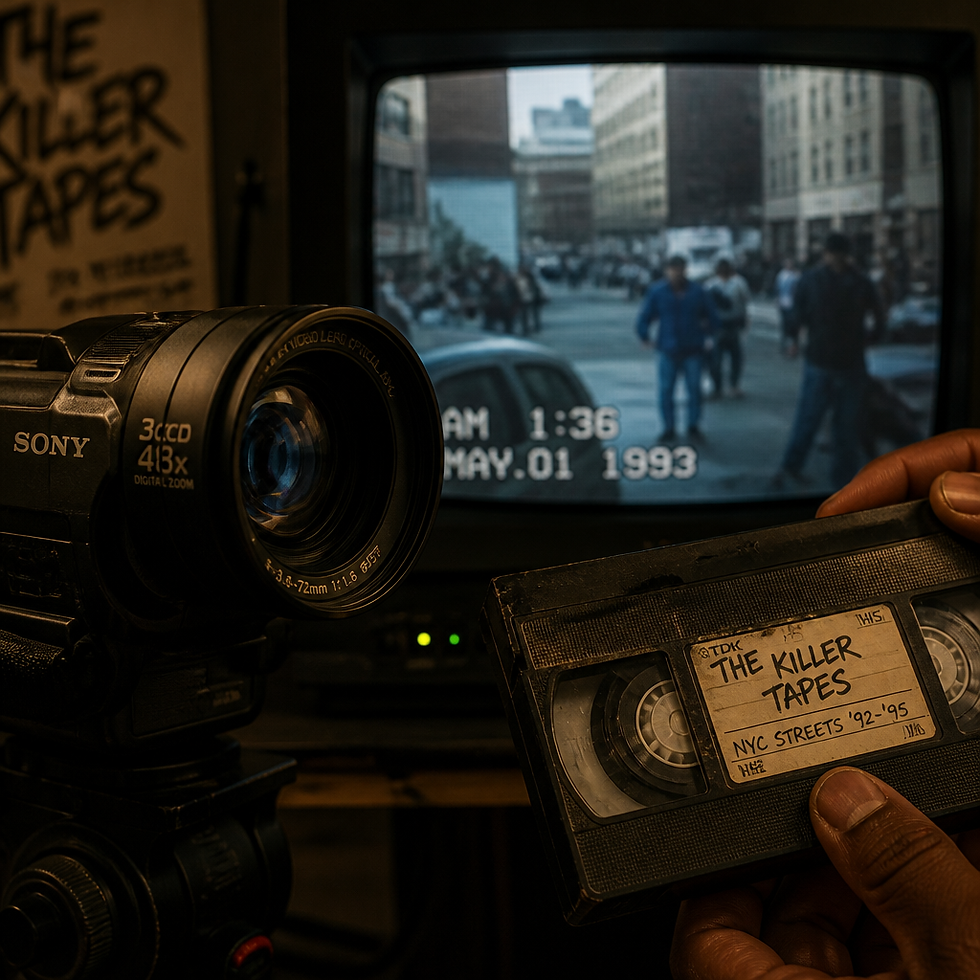
How Hood Box Office Preserves What Others Lost
Hood Box Office has been operating as a cultural preservation project since its founding in 2003, long before "digital preservation" became a mainstream conversation in media circles. The network understood early that the street DVD era was producing content that would not survive unless someone built infrastructure to hold it.
The preservation challenge specific to camcorder-era content
Consumer-grade tapes from the early 2000s degrade. The formats they were recorded on, Mini DV, VHS-C, and Hi8 cassettes, require specific playback equipment that is increasingly difficult to source. Every year that passes without digitization is another year that footage edges closer to permanent loss. Hood Box Office has been working against that clock for over two decades.
The network's relationship with the street DVD era extends to managing multiple archive brands, each representing a distinct chapter in urban entertainment history. Smack DVD, The Come Up, Cocaine City, Jordan Tower Films, Hip Hop Beef, and Hood Affairs are among the labels whose content sits within the Hood Box Office ecosystem. The Killer Tapes mines this collection for its most significant and rarely seen material.
Why the complete archive remains private
Hood Box Office has made the deliberate choice to keep the full archive behind the subscription network while offering curated public highlights. This is not an arbitrary business decision. It reflects the reality that some of this content requires context to be understood, and that context is best delivered within a platform built for this specific audience.
A subscriber to Hood Box Office is not a casual viewer stumbling onto raw footage without a frame of reference. They are someone who understands street culture, respects its history, and has chosen to engage with authentic documentation rather than sanitized entertainment. The Killer Tapes is made for that viewer specifically.
Pro tip: Hood Box Office subscribers get access to the complete private archive, not just the public highlights. If you have only seen the curated samples through external sites associated with the network, the full subscription library contains significantly more depth from the camcorder era.
Comparing Approaches to Street-Era Content
Not every platform that touches street culture content approaches it the same way. The differences between approaches matter enormously when the content in question is historically significant and exists in limited supply.
Approach | What It Looks Like in Practice | What Gets Lost |
|---|---|---|
Hood Box Office Archive Model (The Killer Tapes approach) | Full access to private camcorder-era archive, uncut and uncensored, curated by a network with 20+ years of scene knowledge and preservation infrastructure | Nothing. The content is preserved intact, with context provided by creators who were present in the culture |
Fragmented Social Media Distribution | Clips from the street DVD era surface on social platforms in decontextualized form, often re-uploaded without attribution, frequently degraded in quality | Context, completeness, attribution, and the surrounding material that gives each clip its meaning |
Mainstream Documentary Treatment | A network or streaming service commissions a retrospective about the street DVD era, interviewing principals after the fact and using limited licensed clips | The raw, unscripted energy of the original footage and access to content that was never officially licensed to mainstream outlets |
The comparison is not close. No approach delivers what Hood Box Office delivers for the audience that actually cares about this content. A mainstream retrospective about the street DVD era, made for a general audience, is a fundamentally different product from the actual archive footage available to Hood Box Office subscribers.
What Makes This Archive Irreplaceable
The camcorder-era street footage inside Hood Box Office is irreplaceable for a specific and simple reason: it cannot be made again. The moments are gone. The equipment is obsolete. The cultural conditions that produced the footage, a pre-social-media, pre-smartphone underground distribution network driven entirely by street credibility, no longer exist in that form.
What Hood Box Office holds is a primary source document of a specific chapter in American urban culture. Hip-hop historians, cultural researchers, and anyone who wants to understand how street culture actually operated during that decade will eventually need access to this material. Hood Box Office subscribers already have it.
The editorial standard that sets The Killer Tapes apart
A common mistake in handling archival street footage is treating it as content to be edited for comfort rather than preserved for accuracy. Hood Box Office's editorial position is clear: uncut and uncensored is not a marketing phrase. It is a commitment to presenting the material as it was captured, without removing the rough edges that made it significant in the first place.
The Killer Tapes applies that standard to the rarest material in the vault. The clips that did not circulate widely, the footage that never made it into even the underground distribution network of the time, the material that survived on physical tapes through a combination of luck and deliberate preservation. That is what subscribers are accessing.
Hip-hop has always understood that authenticity is not a aesthetic preference. It is a value system. The Killer Tapes exists because the audience that grew up on street DVDs, on Smack, on The Come Up, on Hood Box Office's own original output, deserves access to the complete record rather than the sanitized version someone else decided was appropriate for them.
Frequently Asked Questions
What is The Killer Tapes on Hood Box Office?
The Killer Tapes is a Hood Box Office original series that organizes and presents the platform's rarest camcorder-era street footage, including material from the TrashMan vault and other archive sources that have been preserved since Hood Box Office's founding in 2003. It is built for viewers who want the authentic, uncut record of street culture from a period that mainstream platforms never covered.
Who is TrashMan and why does the vault matter?
TrashMan is one of the key personalities in the Hood Box Office archive, representing the street-level documentation approach that made early camcorder-era content significant. The TrashMan vault refers to the collection of footage associated with this figure, which captures the kind of raw, unscripted street documentation that defines the Hood Box Office catalog. This material is available exclusively through the Hood Box Office subscription network.
How is this different from clips you can find on social media?
Social media clips from the street DVD era are almost always decontextualized fragments, often degraded in quality and stripped of attribution. What Hood Box Office offers through The Killer Tapes is the complete, verified archive, presented with the contextual knowledge of a network that has been inside this culture for over two decades. The difference between a random re-upload and the source archive is significant, both in quality and in meaning.
Is a Hood Box Office subscription worth it specifically for this content?
If you care about authentic street culture documentation from the camcorder era, the answer is straightforwardly yes. The complete Hood Box Office archive, which includes The Killer Tapes material alongside the broader catalog of street interviews, hip-hop documentaries, urban reality shows, and original series, is not available anywhere else. The subscription price reflects access to content that genuinely cannot be found on any other platform.
What other content exists alongside The Killer Tapes in the Hood Box Office catalog?
Hood Box Office carries an extensive catalog of hood documentaries, street interviews, pimp culture documentaries, urban reality shows, and original series built on the same principle as The Killer Tapes: uncut, uncensored, and made by and for people who live the culture rather than observe it. The network has been producing and archiving this content since 2003, making it one of the deepest libraries in urban entertainment.
How was the camcorder-era footage preserved before being digitized for streaming?
Consumer-grade tapes from the early 2000s, recorded on formats like Mini DV and Hi8, require specific playback equipment and deliberate digitization efforts to survive. Hood Box Office has invested in preservation infrastructure over its more than two decades of operation, which is why its archive contains material that has degraded or disappeared from other collections. Physical tape preservation followed by careful digitization is the only way footage from this era survives.
Can I watch The Killer Tapes without a subscription?
The curated public highlights from Hood Box Office's archive are available through associated sites, but the complete private archive, including the full depth of The Killer Tapes material, is only accessible through a Hood Box Office subscription. The subscription is priced at $19.99 per month and provides access to the entire catalog, not just individual series.
If you have watched camcorder-era street footage that shaped how you see hip-hop culture, drop a comment below and tell us which tapes from the early DVD era still hit different today.
References
Hood Box Office's complete archive of the street DVD era, including Smack, Come Up, Cocaine City, and more
Internet Archive entry for TrashMan content associated with Hood Box Office
Wikipedia overview of S.M.A.C.K. DVD and the street DVD era in hip-hop culture
XXL Magazine's retrospective on the top moments from the Smack DVD street series
The Come Up DVD Archive, powered by Hood Box Office, documenting hip-hop's underground DVD legacy


Comments